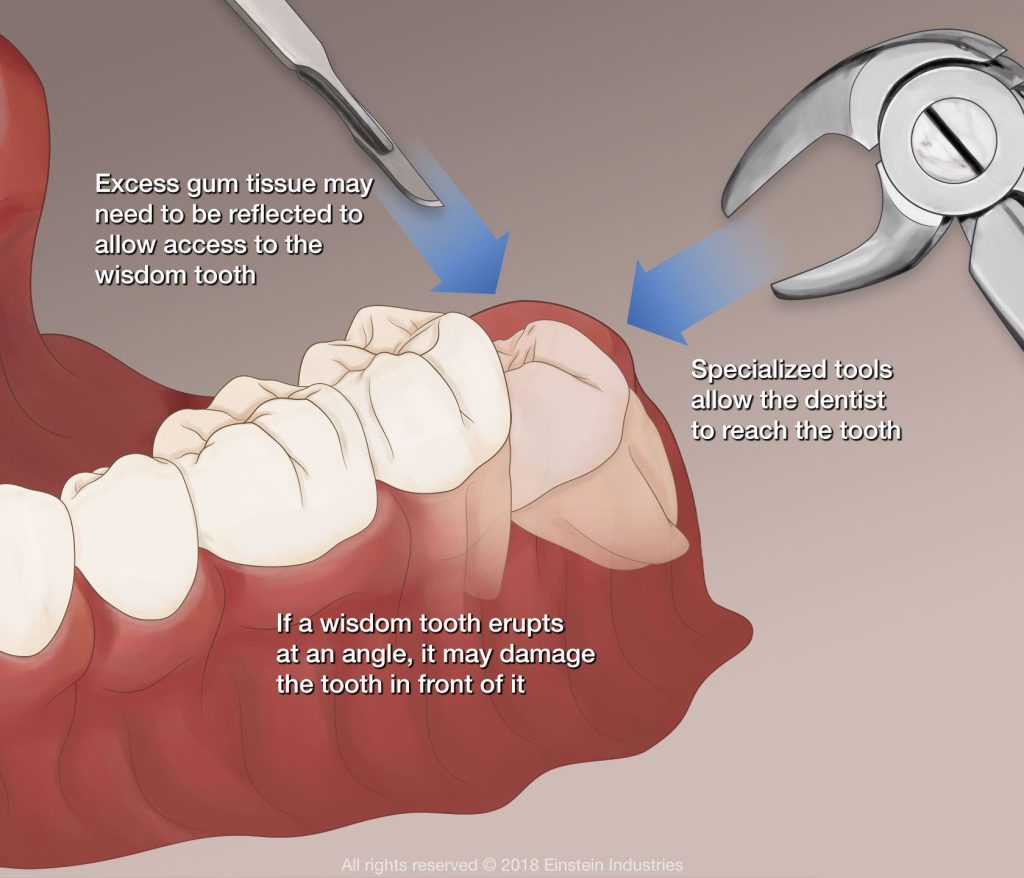
When the wisdom teeth do not have enough room to erupt properly, they can cause issues like impaction and overcrowding.
We use advanced dentistry and sedation techniques to perform your extraction with little or no discomfort.
Visit Fort Bend Dental in Missouri City, Richmond, Aliana, Sugar Land, or Rosenberg, TX, to find out if wisdom teeth removal is right for you or your child.
Everything You Want to Know About Wisdom Teeth Removal
When Should the Wisdom Teeth Be Removed?
Wisdom teeth are a third set of third molars, and are the last permanent teeth to erupt. These molars usually develop and come in between the ages of 17 and 25, and they often cause complications because they become trapped in the jaw or there is not enough room for them. In some cases, patients elect to remove wisdom teeth before they result in dental problems.
Your Comfort Is Our Priority
One of the most common reasons a patient may delay a visit to the dentist is fear of pain. Our staff at Fort Bend Dental in Missouri City, Grand Parkway, Rosenberg, TX, Aliana and Sugar Land, TX understands this anxiety and takes every measure to ensure you experience little or no pain during your procedure.
More importantly, our dentists combine a gentle method of tooth extraction with modern, innovative dental technology for the most conservative treatment possible.
Reasons for Wisdom Teeth Extraction
Impacted wisdom teeth can remain trapped in the jaw, develop horizontally, or erupt partially from the gums. This can make it easy for food and debris to accumulate, increasing the risk of pain, infection, and swelling. However, even if you do not experience pain, impacted teeth should be removed to prevent future issues. Some of the potential oral health concerns that can result from avoiding wisdom tooth extraction include:
Advanced infection caused by trapped food or debris around the tooth, which can lead to periodontal (gum) disease
Damage to the tooth, nearby teeth, or surrounding bone
Development of a fluid-filled sac (cyst) around the wisdom tooth
Complications with past or current orthodontic treatments
These issues can affect your oral health and the appearance of your smile. Extensive damage can also lead to further complications, possibly leading to the need for restorative dentistry procedures in the future.
Frequently asked questions
Wisdom teeth are often removed to prevent overcrowding, pain, infection, or damage to neighboring teeth. They can become impacted, meaning they don’t have enough room to emerge properly, leading to potential oral health issues. No need to worry, you don’t lose any wisdom when you have your wisdom teeth removed.
Wisdom teeth removal is an outpatient procedure performed under local anesthesia, sedation, or general anesthesia. Our Fort Bend Dental Oral Surgery team will remove the teeth through incisions in the gums, and the procedure usually takes about 45 minutes to an hour. Many patients will choose to do this procedure under sedation – so it’s just a quick nap and you are all done!
Recovery typically takes about 1 to 2 weeks, but most of the healing happens within the first 3-5 days, and many patients are even able to return to work or school the next day! At Fort Bend Dental, our patients don't have to worry about dry sockets, thanks to our advanced techniques that make recovery much smoother. We utilize bone grafting for wisdom teeth removal—a practice that 99% of offices don't offer. After the tooth is extracted, we fill the socket with bone, ensuring it's packed tight and sealed for optimal healing. Our surgery team will provide you with clear post-op instructions to ensure a smooth and easy recovery.
After the surgery, it's best to start with soft foods like yogurt, applesauce, mashed potatoes, and soups – so lots of yummy things! Avoid hot, spicy, crunchy, or chewy foods for the first few days to prevent irritation and complications, as well as drinking with a straw.
It depends on the insurance you have, but most insurances do offer some sort of coverage for wisdom teeth removal. Our team is here to help you understand your specific insurance benefits and what to expect. We also have some great financial options in place to help make the care you need more affordable. We’re here to assist you every step of the way, whether it’s a wisdom tooth extraction or any other oral surgery need.
"First visit with this office and I am ALREADY impressed..."
Hear from Our Patients
Debra Gunn
Feb 23, 2024
Thank you for allowing me in as quickly as was done! The care by Dr George Jabbour was awesome! The staff was so kind and efficient. The facility is fabulous!
This was my first visit with this office and I am ALREADY impressed with the level of professionalism and courtesy they have shown. They mapped out a plan of treatment that fit for me and never pushed me to do anything I was uncomfortable with. Dr. Brian K. Machart and his staff (Kim) REALLY made me feel welcome and listened to everything I said. I will definitely be going to this office for all my dental needs! Thank you so much for your care!
For wisdom teeth that have fully erupted, our doctors can remove the tooth as they would with any regular molar tooth extraction at our Missouri City, Richmond, Rosenberg, TX, or Aliana, TX and Sugar Land, TX, offices serving Fort Bend County.
The removal of an impacted wisdom tooth is crucial to your dental health.
1 Anesthesia
To begin your procedure, we administer the type of anesthesia that is right for your needs.
2 Incision
While each patient requires different treatment, the general method of wisdom tooth extraction begins with an incision in the gum tissue to expose the tooth and bone.
3 Extraction
We will remove any bone blocking access to the tooth. Your tooth will then be extracted, sometimes in pieces for easier removal and less impact to the surrounding tissues.
4 Recovery
We will clean the treatment area and suture the incision closed. Gauze is then placed over the extraction site to control bleeding and help a blood clot form. To reduce swelling, ice packs can be placed on the cheeks in 20-minute increments during the 48 hours after the procedure.
We use cookies and similar tracking technologies to understand how visitors interact with our site. By continuing, you consent to our use of analytics cookies.
Privacy Policy
Help us understand how visitors use our site — page views, session data, and performance metrics (e.g. Google Analytics).
Used for ad performance tracking and remarketing campaigns (e.g. Google Ads, Meta Pixel).